Claudio BRAVO
(Valparaiso 1936 - Taroudant 2011)
Still Life with Bread and Potatoes
Pastel on blue paper.
Signed and dated CLAUDIO BRAVO / MCMLXXXV in red chalk at the lower right.
749 x 1093 mm. (29 1/2 x 43 in.) [sheet]
Signed and dated CLAUDIO BRAVO / MCMLXXXV in red chalk at the lower right.
749 x 1093 mm. (29 1/2 x 43 in.) [sheet]
This very large and refined still life, executed in pastel, was drawn in 1985. Characterized by an even illumination in which each of the objects is seen with the utmost clarity, works such as this serve to underscore Claudio Bravo’s comment that ‘The objects in these still life paintings transcend reality. I use light a bit like Zurbarán did. He was one of the few painters that gave true transcendent meanings to objects. This treatment of the light makes things seem more than they are…their essence is greater.’ The larger wicker basket appears in other still life compositions by the artist, such as an equally sizeable pastel drawing of Bread and Artichokes on a Table of 1984, as well as an oil painting of Breads completed in 2000.
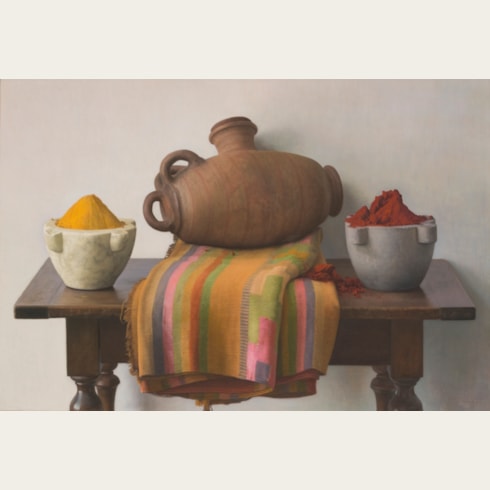
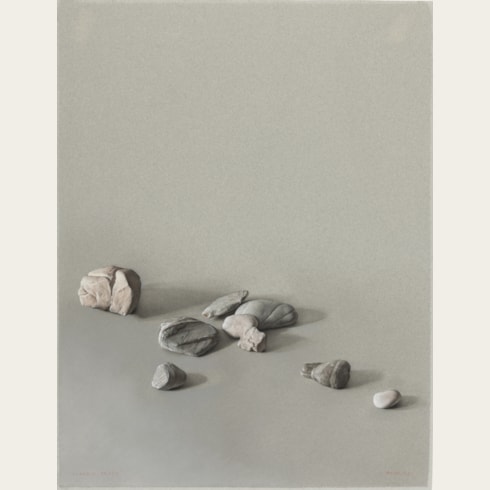
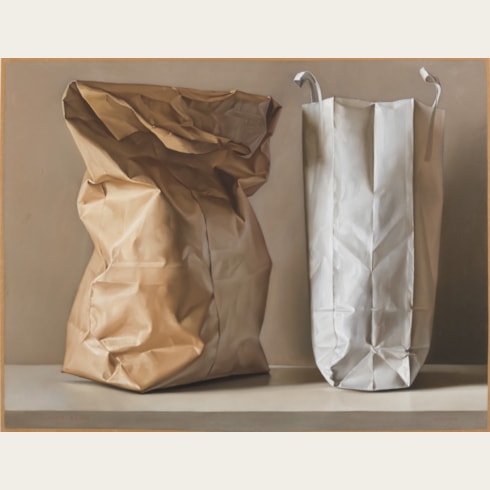
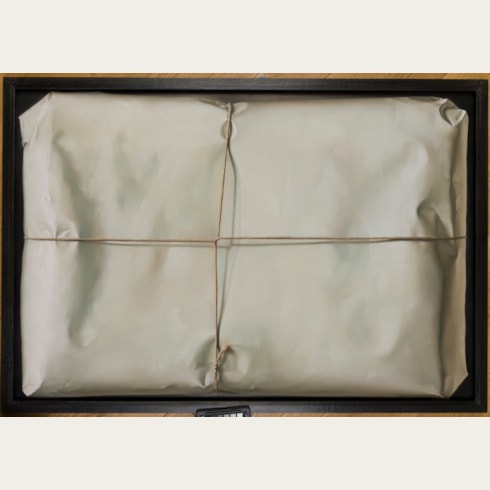
Pastel works such as this are a testament to Bravo’s abiding interest in the classical tradition of European still life painting, and in particular the bodegón paintings produced in Spain in the late 16th and 17th century. As the artist’s friend, the Peruvian writer Mario Vargas Llosa, has written of Bravo, ‘His true masters are the great classical masters, particularly Spanish 17th century, the Golden Age of Baroque, such as Fray Juan Sánchez Cotán, Antonio de Pereda or Francisco de Zurbarán, who revolutionized the treatment of the object, conferring on their still lifes – through a scrupulous study of details and the play of light – a dignity and intensity which appear to emancipate them from the inert and humanize them. Claudio Bravo has updated this old school with his oil paintings, pastels and drawings of flowers, fruit, vegetables, jugs, tablecloths, mortars, cruets, cooking pots, ostrich eggs, rugs, glasses, stones, and hampers which it would be unfair to call “still life”, since that label immediately suggests the inanimate, the decorative…these images shimmer like precious jewels, they become giant-like heroes whose outstanding presence has desolated their surroundings.’
Pastel works such as this are a testament to Bravo’s abiding interest in the classical tradition of European still life painting, and in particular the bodegón paintings produced in Spain in the late 16th and 17th century. As the artist’s friend, the Peruvian writer Mario Vargas Llosa, has written of Bravo, ‘His true masters are the great classical masters, particularly Spanish 17th century, the Golden Age of Baroque, such as Fray Juan Sánchez Cotán, Antonio de Pereda or Francisco de Zurbarán, who revolutionized the treatment of the object, conferring on their still lifes – through a scrupulous study of details and the play of light – a dignity and intensity which appear to emancipate them from the inert and humanize them. Claudio Bravo has updated this old school with his oil paintings, pastels and drawings of flowers, fruit, vegetables, jugs, tablecloths, mortars, cruets, cooking pots, ostrich eggs, rugs, glasses, stones, and hampers which it would be unfair to call “still life”, since that label immediately suggests the inanimate, the decorative…these images shimmer like precious jewels, they become giant-like heroes whose outstanding presence has desolated their surroundings.’
Born in Valparaiso in Chile, Claudio Bravo received a Jesuit education in Santiago and there took art classes in the studio of the painter Miguel Venegas Cienfuentes, eventually deciding to become an artist himself. He had his first exhibition at the age of seventeen, and was soon much in demand as a portrait painter. In 1961, after several years living and working in Santiago and Concepción, Bravo left Chile for Europe. Settling in Madrid, he established a very successful career as a painter and society portraitist. In 1968 he spent six months working in the Philippines, and in 1970 had his first solo exhibition in New York. In 1972 he abandoned his busy life in Madrid for a large house and studio in Tangier in Morocco, where he began to focus on still life and landscape painting. Dividing his year between his studio in Tangier and another in Marrakech, as well as one in the far south of Chile, Bravo enjoyed a successful career until the end of his life. As one scholar noted, at the time of an exhibition of his work which toured four American museums in 1987 and 1988, ‘Claudio Bravo is one of the most significant artists working in a realist mode today. A painter and draftsman with a singularly fertile imagination, Bravo draws upon a myriad of sources in the art of the past and present, combining them in a uniquely personal manner.’
In 1994 a large exhibition of Bravo's paintings was mounted at the Museo Nacional de Bellas Artes in Santiago, Chile. Works by Claudio Bravo are in the collections of the Baltimore Museum of Art, the Ludwig Museum in Cologne, the Metropolitan Museum of Art and the Museum of Modern Art in New York, the Philadelphia Museum of Art, the Princeton University Art Museum, the Museum Boijmans-van Beuningen in Rotterdam, the Museo Nacional de Bellas Artes in Santiago and elsewhere.
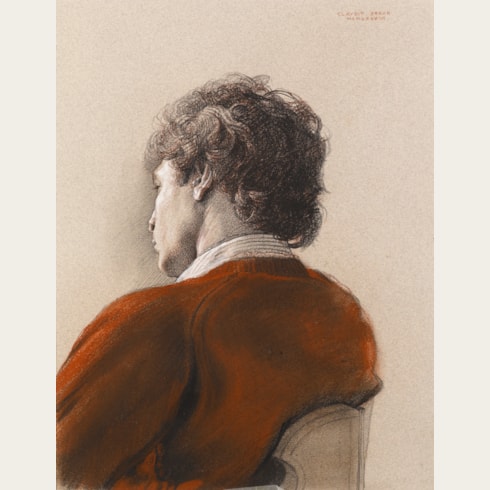
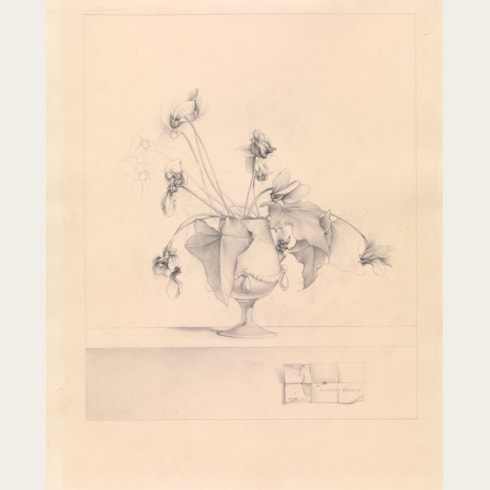
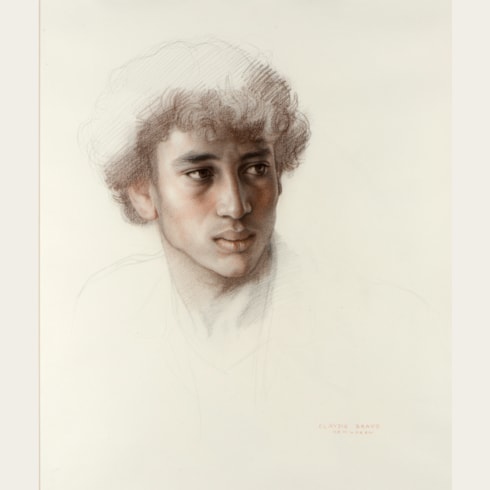
Long recognized as a superb draughtsman, Bravo was a master of pencil, coloured chalks and pastel, which he applied with precision and delicacy.
Provenance
The estate of the artist
Marlborough Gallery, New York
Marlborough Gallery, Madrid
Acquired from them by a private collection
Anonymous sale, New York, Christie’s, 18 May 2015, lot 4
Anonymous sale, New York, Sotheby’s, 21 November 2017, lot 35
Private collection.
Marlborough Gallery, New York
Marlborough Gallery, Madrid
Acquired from them by a private collection
Anonymous sale, New York, Christie’s, 18 May 2015, lot 4
Anonymous sale, New York, Sotheby’s, 21 November 2017, lot 35
Private collection.