

Sir Stanley SPENCER
Cookham 1891 - Cliveden 1959
Biography
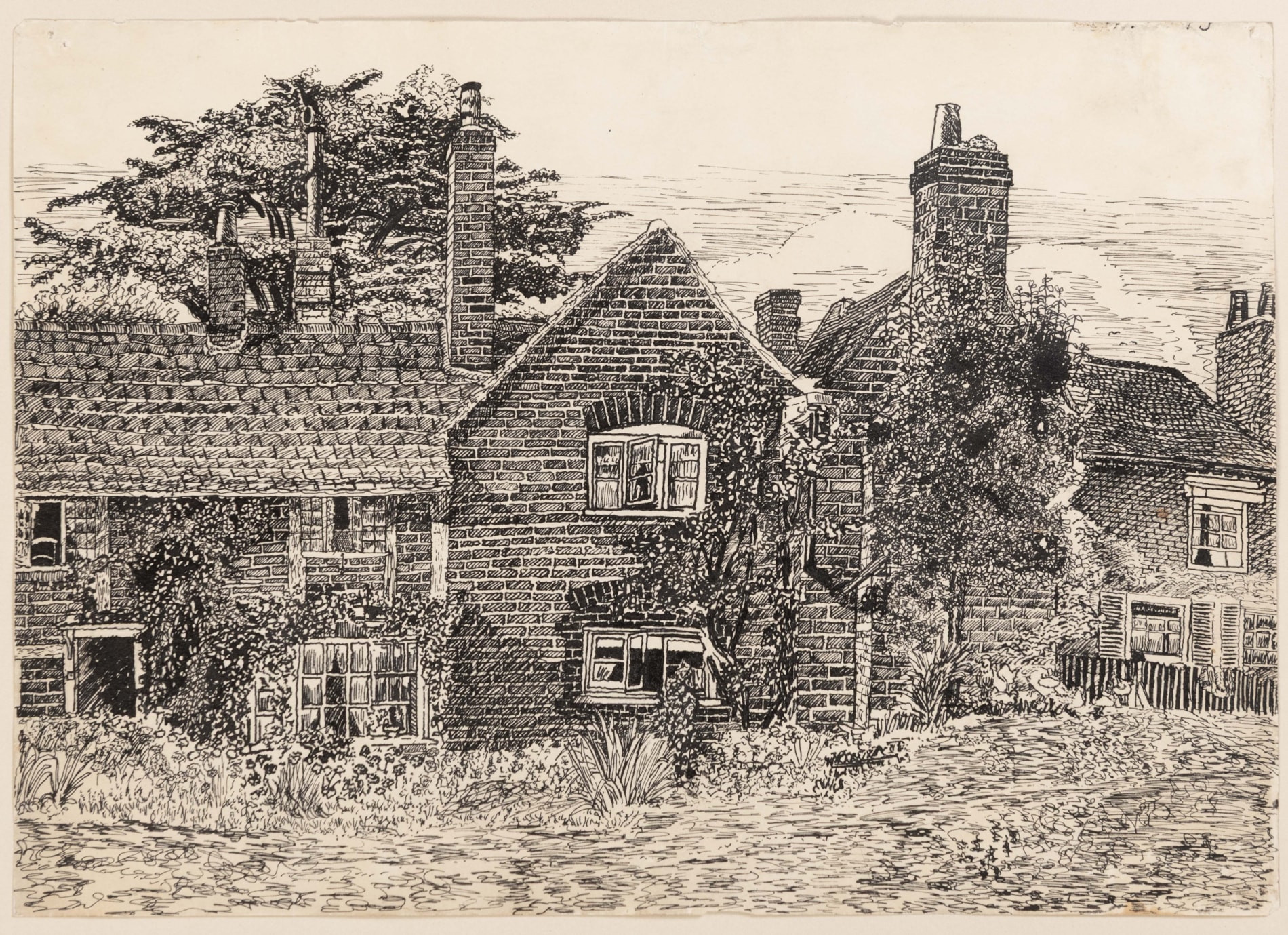
As a child, Stanley Spencer was a poor academic student but a gifted draughtsman, and from the age of around fourteen began making pen and ink drawings, often of fairy tale subjects. Following a year of artistic instruction at the Maidenhead Technical College, three miles from his native village of Cookham, he gained acceptance to the Slade School of Fine Art in London in 1908, at the age of seventeen. Taught by Henry Tonks, he studied at the Slade between 1908 and 1912, alongside such young artists as David Bomberg, Dora Carrington, Mark Gertler, Paul Nash, C. R. W. Nevinson and Edward Wadsworth. His drawings were much admired at the Slade; as Tonks later wrote to the Spencer family, ‘In some ways he has shown signs of having the most original mind of anyone we have had at the Slade and he combines this with great powers of draughtsmanship.’ A painting and two drawings by Spencer were included in the British section of Roger Fry’s Second Post-Impressionist Exhibition at the Grafton Galleries in London in 1912, alongside works by Vanessa Bell, Eric Gill, Duncan Grant, Wyndham Lewis and Fry himself.
At the beginning of the First World War, Spencer enlisted in the Royal Army Medical Corps and in 1916 was posted to a field ambulance unit in Macedonia, later transferring to an infantry unit. His involvement in the Great War had a lasting impact on him and inspired many of his later work, in particular the extensive decoration of the Sandham Memorial Chapel in Burghclere in Hampshire, composed of sixteen oil paintings and created in honour of the ‘forgotten dead’, which is considered one of his finest achievements. In 1925 Spencer married Hilda Carline, a fellow artist herself, and the couple settled in Hampstead in London. Two years later, in 1927, Spencer’s first solo exhibition took place at the Goupil Gallery in London. The centrepiece of the show was one of the artist’s largest oil paintings, The Resurrection, Cookham, painted between 1924 and 1927 and now in the Tate. The monumental canvas was much admired by critics, with the Times correspondent describing the work as ‘the most important picture painted by any English artist in the present century…It is as if a Pre-Raphaelite had shaken hands with a Cubist.’ In the early 1930s Spencer moved back to Cookham, and in 1932 became an Associate Member of the Royal Academy and showed several works at the Venice Biennale. He began an affair with the aspiring artist Patricia Preece, who also became a model for many of his works, which ultimately led to his divorce from Hilda. Spencer married Preece in 1937, but the marriage soon fell apart. Her demands, alongside his familial responsibility and his inability to manage his finances, meant that Spencer was often short of money. His agent and dealer Dudley Tooth advised him to produce ‘anything that would sell’, and as a result, many landscapes and portraits were produced during this period of the artist’s life.
During the Second World War Spencer was engaged by the War Artists’ Advisory Committee to paint an extensive series of large works collectively entitled Shipbuilding on the Clyde, painted at the Lithgows Shipyard in Port Glasgow and eventually completed in 1946. Having earlier been made CBE, Spencer was knighted in 1958, the year before his death from cancer. Today, his works are held in numerous museum collections, including the Imperial War Museum, the National Portrait Gallery and the Tate in London, as well as the Ashmolean Museum in Oxford and many other institutions, notably the Stanley Spencer Gallery in Cookham.
