
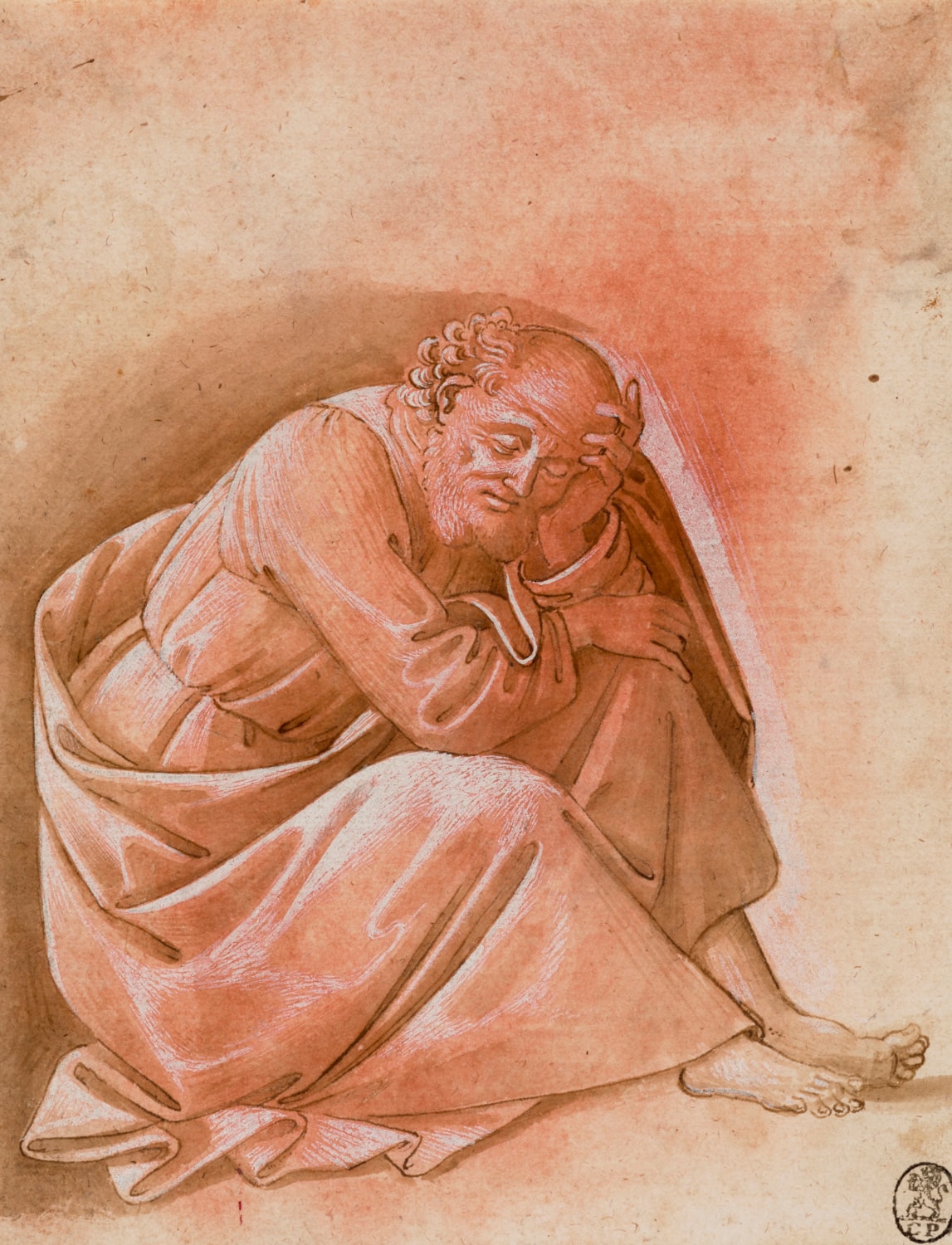

Workshop of Sandro BOTTICELLI
Florence c.1445 - Florence 1510
Biography
Alessandro di Mariano Filipepi was the son of a leather worker, and eventually took his brother’s nickname ‘Botticelli’, meaning chubby, as a family name. He was trained in the studios of Fra Filippo Lippi, Andrea del Verrochio and Antonio del Pollaiuolo, and his first documented painting is a Fortitude painted in 1470 for the merchant’s guild of Florence. Among his patrons was Lorenzo (Il Magnifico) de’ Medici and members of many significant Florentine families, for whom he painted both secular and religious pictures, as well as portraits. Between 1481 and 1482 Botticelli was one of a number of Florentine and Umbrian painters engaged on the fresco decoration of the side walls of the Sistine Chapel in the Vatican, where he painted three large scenes and a number of papal portraits. His reputation enhanced by his work in Rome, Botticelli returned to Florence and throughout the 1480s received numerous important commissions for altarpieces, devotional easel pictures and oval tondi, as well as portraits and mythological subject pictures, notably the large paintings La Primavera, The Birth of Venus and Pallas and the Centaur. Apart from his time in Rome and a brief period working in the Camposanto in Pisa in 1474, Botticelli was to remain in Florence for his entire career. His last documented work, an altarpiece of The Pentecost for a church in the town of Montelupo, was completed in 1505.
Despite Giorgio Vasari’s statement, in his biography of Botticelli, that ‘Sandro’s drawings were extraordinarily good, and so many, that for some time after his death all the craftsmen strove to obtain some of them’, only a very few drawings by the master are known today. Apart from a series of ninety-two largely unfinished silverpoint drawings on parchment intended to illustrate a manuscript of Dante’s Divine Comedy, executed in the 1490s and now divided between the Kupferstichkabinett in Berlin and the Vatican Library, less than thirty autograph drawings by Botticelli survive today.
